Guiding Your Landscape into the Future

If your community or site was landscaped over two decades ago, you likely have been faced with repairs and enhancements. Plant material has a life span, irrigation components wear out, drainage systems fail, gardens evolve, trees outgrow their spaces, pests invade. The list goes on. Landscapes are after all, are living and constantly changing.

Are you planning for the future of your landscaped site? Do you have budgeted reserves for future improvements? How willing are community members to accept a special assessment to fund projects?

Landscaping and water are likely the largest recurring items on your budget. Landscaping directly affects your community and property values. It’s what people first see when they drive in. It is an asset which should increase in value. But how?

What we find working with clients is a revolving door of band aid solutions. Each contractor offering their services and enhancements. Some landscape contractors and boards are successful and stick with a project long term to see the communities vision through. Others get replaced, the vision is lost.

A comprehensive strategy to guide landscape planning is necessary. This starts out, like any project, at setting goals. Each community has its own. We can then build consensus, rally residents around these goals to budget, fund, and move projects along. No more band aids to stop the bleeding.

Landscape Master Plans (LMP’s) are long range planning documents built around pre-defined goals. Some common goals are to decrease water consumption, decrease maintenance costs, build sustainable landscapes and enhance aesthetic appeal. LMP’s identify the what, how, when, why, how much of future landscape projects.

We work collaboratively with landscape committees, residents, boards and contractors to guide work with specific intent. Each recommendation in our LMP’s has an intent in the goals identified. The solutions are varied and there are a multitude of options to meet the needs of any landscaped site into the future.

Our LMP’s work to quantify savings over time to initially fund projects. Much of what we recommend goes back to the basics of horticulture, plant care and nurturing healthy landscapes in the dry environment of Southern California. Botanicon analyzes the site, potential solutions and recommends varying strategies, new technologies and local incentives.

Remember quick fixes are just that, and are generally expensive in the long run. Solutions abound to guide your communities landscape assets into the future. Landscape Master Plans are about working smarter, not harder, to achieve your goals.
Mulch is the Answer!

7 Benefits of Landscape Mulch

The single best thing you can do for a landscaped site of any size, any age, any soil type is to cover your soil in coarse wood chip mulch. And keep it covered! Why?

  1. Builds healthy soil. Healthy soil requires less fertilizer, pesticides and water. Less inputs, reallocate labor to other tasks.
  2. Conserves moisture. Here in San Diego, we are lucky to get 10″ of rain a year. The rest is supplemental, expensive, travels hundreds of miles to your site.
  3. Inhibits weed growth. Less labor hand pulling, spraying and applying chemicals, less competition for desired plants.
  4. Improves soil structure. Heavy, clay soil to structureless, coarse soils are transformed over time with the organic activity under a layer of mulch covered soil. Better soil structure improves plant health.
  5. Erosion control. Covered soil does not blow away or move as readily with water. Mulch acts as a buffer for water droplets to disperse.
  6. Reduce compaction. As a buffer layer to protect the soil pore spaces from compressing. Pore spaces are where air and water should be stored for plant use.
  7. Aesthetics. It just plain looks good. Landscape mulch is unifying and shows you care about your site. A fresh layer of mulch speaks volumes.

What type of mulch should I use?

Coarse woody mulch, like arborist’s chips, are the best type of mulch. The coarse texture, mixed with shredded greens, provides ample space for air and water to flow to the root zone of plants and trees. Fine mulches tend to mat into an impermeable layer. Rocks and gravel just cover the soil and provide little horticultural benefit. Plus, arborist’s wood chips are a responsible way to recycle a local product. Make friends with your local arborist. Have a staging location on each job site for them to dump a supply. Use it consistently. Chips from trees with potential borer infestations, such as ISHB and GSOB, should be 1″ or less in size. Read here for more on this topic. https://research.libraries.wsu.edu/xmlui/bitstream/handle/2376/5262/FS160E.pdf?sequence=2

How do I apply mulch?

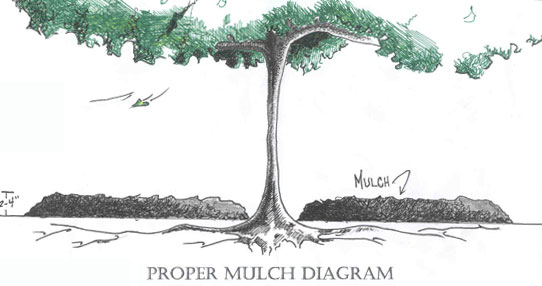
Apply a 3″-4″ layer on top of soil. Keep mulch from bunching up around the base of plants (a few inches away) and trunks of trees (6″ away). It’s best to mulch trees out beyond their drip line.

If trees are in turf, remove it. Yes, you heard me. Create beautiful mulched tree wells which won’t require mowing over, compacting root zones or weed whacking trunks. Stage mulch in large piles for ease of distribution with a wheelbarrow. It’s best to apply mulch to moist soil to jump start the organic flora and fauna of the soil. Let them work on transforming your soil structure, cycle nutrients and create a moisture reservoir for roots. If leaf accumulation requires periodic cleanup in mulched areas, using the leaf blower, on dry leaves, on low speed, at an angle as horizontal to the ground as possible removes leaves and not mulch. It is possible with skill and practice. Keep that mulch in place!

Spring Irrigation Tune-Up

Want to save water and money irrigating your landscape? Not sure what you can do? I’ll be leading an online workshop and hosting one on one consultations for the Water Conservation Garden on the Cuyamaca College Campus in El Cajon April and May 2020.

Online workshop: Spring Irrigation Tune-up (choose one)

  • Tuesday April 14 @ 11:00am-1:00pm
  • Saturday May 16 @ 10:00am-12:00pm

Online or phone: One on One Irrigation Consultation (choose one 45 minute time slot from the following dates/times)

  • Saurday, April 18 10am-12pm
  • Tuesday, April 21 12pm-2pm
  • Friday, April 24 2pm-4pm

Register to attend one or both of these sessions by visiting www.thegarden.org/events/ You will receive insight into getting your irrigation system ready for the dry months ahead and managing your landscape water usage efficiently.

Low Water Use Plant for Erosion Control

We get a lot of requests for slope plantings and how to manage soil erosion in landscaped areas. Erosion can be mitigated with plantings of various types of material with differing rooting depths and structures. Ideally a mix of trees, shrubs and ground covers will grow in to stabilize soils on slopes.

Renovations to replace aging plant material on slopes offers an opportunity to update the plant palette and conserve resources in the long run. This opportunity has been exacerbated by the decline of two common slope plantings in San Diego, Acacia redolens and red apple Aptenia.

Acacia redolens, planted widely in the 1980’s and 90’s has reached the end of its useful life, sprialing downward in health and promoting a fire hazard with its copious amounts dead and woody undergrowth. Downy mildew is affecting many established plantings of red apple Aptenia, a commonly used mass ground cover for common area slopes in homeowner associations.

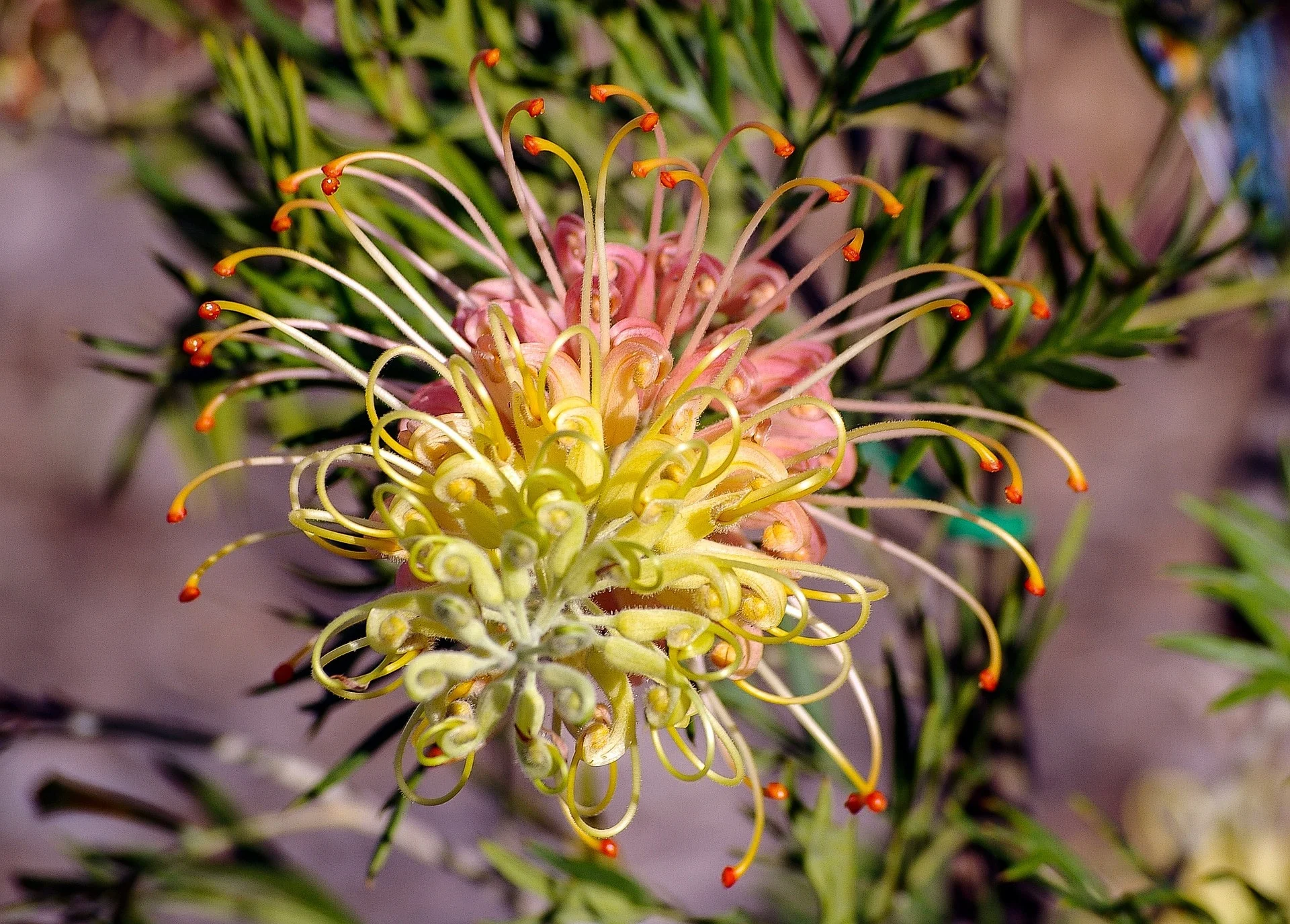
A great plant for these applications is Grevillea juniperina ‘Molonglo’. This Grevillea is a sprawling, mounding, evergreen ground cover with masses of beautiful green needle-like foliage showing off apricot-orange blooms in spring-summer. It is low water use and needs virtually zero maintenance if given enough room to sprawl. No pruning, low water, stunning flowers, slope stabilization, grows densely to smother weeds and it attracts hummingbirds too!

Defining Long Term Maintenance

Long Term Landscape Maintenance is Asset Management

Hello all of you interested in managing site environments and landscapes. I thought I would share with you a presentation titled “Defining Long Term Landscape Maintenance.” This topic really highlights why I started the business Botanicon, out of a need for support to achieve everyone’s goal of a beautiful, well cared for landscape. The broad topic of landscape management is a blend of scientific principles, art & design, facilities construction & management, water resources, people skills, community building and the environment. We at Botanicon are here to support clients in decision making, consulting and management of their landscaped environment. Click on the image below to view the slides. I hope you find the information useful.


Less Maintenance, Water and Waste

Planting drought tolerant plants to save on water, waste, maintenance

Show Me the Data

The City of Santa Monica conducted a side by side case study from 2004-2013 of traditional landscaping vs. sustainable landscaping methods. They collected data on maintenance, water use and waste produced. The data was astounding, just for one small residential front yard! So much extra work and resources go in to the long term management of a site planted using traditional methods. It invites problematic and costly maintenance practices for years to come. Imagine the long term impact made on a large site or development. A great read!
https://www.smgov.net/Departments/OSE/Categories/Landscape/Garden-Garden.aspx

Sustainable landscape used

83%

less water than traditional landscape

Sustainable landscape generated

56%

less waste than traditional landscape

Sustainable landscape required

68%

less maintenance than traditional landscape

What’s on Your Mind?

Purple wisteria in bloom

5 Takeaways from Stakeholder Surveys on Your Landscaped Site

Some people love surveys, some people cringe. But when managing a large landscaped site long-term, the data a survey can provide decision makers is invaluable. Plants are living assets, which grow, change through the seasons, require ongoing maintenance and monitoring. There are so many choices in the market for landscape service providers, new plant cultivars, water restrictions, noise considerations, tree ordinances, demographics of site users, and so much more to each specific site. It is not one size fits all.

So why not ask them? We make it simple and user friendly to get the data to support smart decisions.

  1. What is important to site users? It could be using less water, having colorful plantings at community entrances, safe and inclusive playgrounds or budget friendly maintenance services. Or maybe it is something you never thought of, a community garden, understanding the benefits one mature tree can provide a community, knowing the plants in their environment.
  2. What is not important to site users? This is possibly better data than what is desired. This is an area of potential cost savings.
  3. What results are desired? What level of maintenance do users expect? Do stakeholders expect to see someone on site every day, once a week? There are many ways to achieve a well maintained appearance, as long as the results are visible and apparent to the people who pay for it.
  4. What percent of the communities landscape budget should be spent on what? This gets stakeholders who love numbers to understand where their money goes. Maybe a phased plant replacement plan is prudent for the long term budget.
  5. What is the long range vision for the site? Users can imagine what their community will look like 5 to 10 years down the road.

From here we have data to develop a long range plan and budget to meet the landscape goals of our clients. We can write specifications for landscape maintenance to deliver results expected within our clients budget. We know our decisions are based on data with input from all stakeholders and site users. We can move forward to implement the plan collaboratively, in the best interests of the site and our client.

Landscape Maintenance Specifications

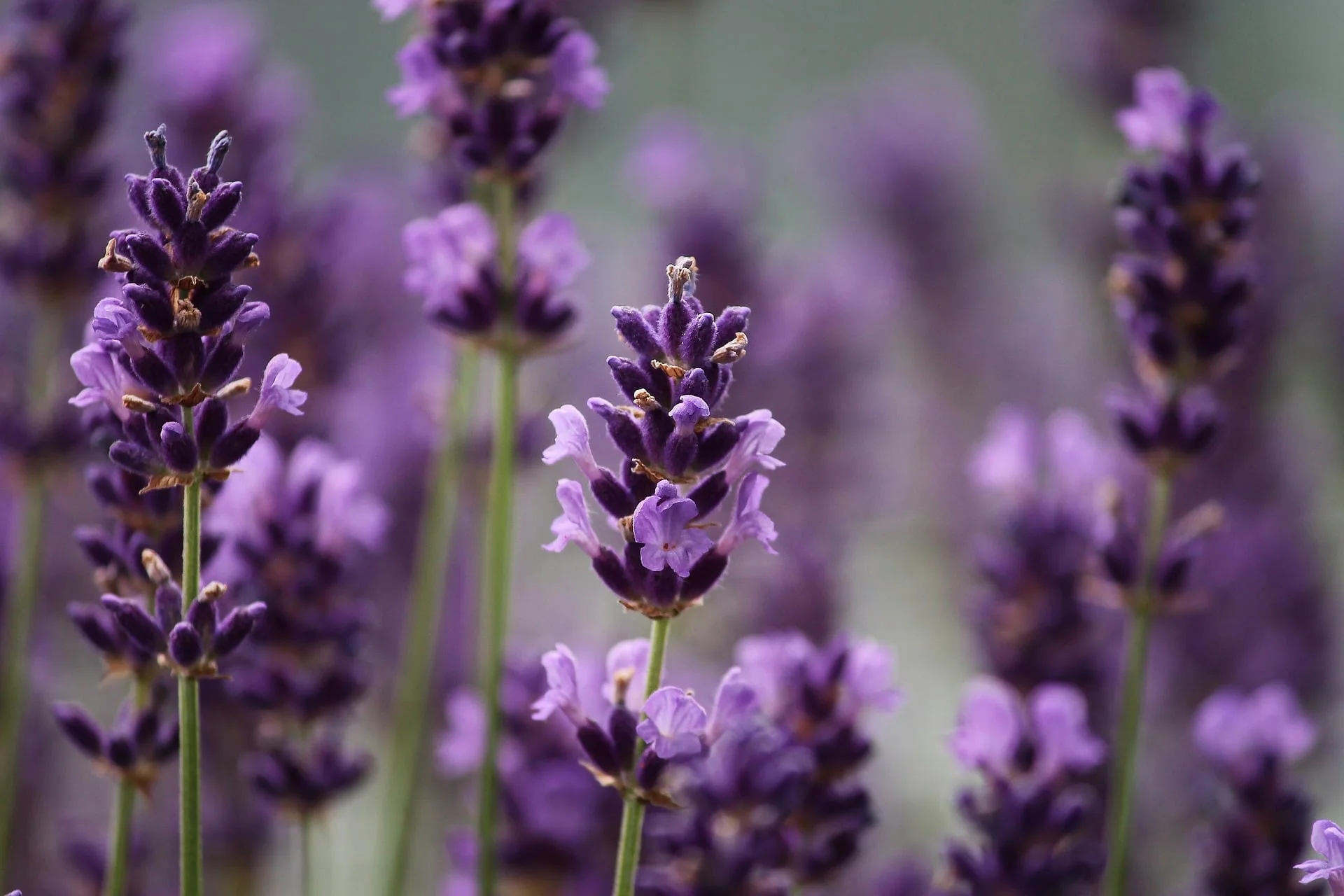
Purple lavender in bloom

5 Advantages to Writing Maintenance Specs Specific to your Site

Specifications for landscape maintenance are instructions to the contractors performing the work – mowing, pruning, leaf clean up, irrigation management, pest monitoring and control, etc. They are written by professionals knowledgeable in horticulture, plant care, irrigation and landscape management. With a landscape inventory in place, maintenance specs specific to your site, and input from owners and managers, we can now drive effective long term landscape management plans within a clients budget.

  1. Intent of the task – why is the landscape contractor being asked to perform the task? What is the desired result and how specifically will it be achieved? For example, turf care. Simply stating that the turf shall be mowed and green gives the contractor a lot of room for interpretation. It could be a patch of green weeds which gets mowed once a month and that would meet the requirement of the spec. Too vague.
  2. Reference standards – in horticulture, standards for pruning, irrigation, mowing, planting, etc. exist. We do not have to reinvent the wheel. Simply make the bidders aware of the standards and how they will be enforced. The standards are accepted industry wide as best practices for landscape assets.
  3. Include specs in contract – Specifications for landscape maintenance are a vital part of the landscape contract. Contractors can bid competitively because they are all bidding the exact same things. Sites should be writing their own specs and contracts, having the contractor sign their document. Not the other way around.
  4. Consensus – all parties involved know what is expected, how to achieve it and how it will be monitored. Input from stakeholders is recognized to drive effective results on their site.
  5. Planning – revisit maintenance specs each year and decide if there are edits necessary. Look at the budget and see where the most money is spent on landscape maintenance. Hedging 6 times a year, water leaks, unused turf areas, blowing away costly mulch with the leaves, heavy fertilizer use, etc. can all be mitigated with good planning. With hindsight, we can plan better into the future for enhancements and upgrades to make sites more resource sustainable.

What Should We Plant in Our Landscape?

Wondering what plants to choose for your associations renovation? Register here for our seminar focusing on landscapes for HOA sites!

Topics include plant choices for specific areas, risk management in the landscape, landscape specifications and maintenance contracts, and a landscape walkthrough on site with Tiffany Faulstich of Botanicon and Brad Brown of Tree Life Consulting.

Fri. Nov. 15 11am-4pm at Stonecrest Village Recreation Center, 3110 W. Canyon Ave., San Diego CA 92123. See you there!

var exampleCallback = function() {
console.log(‘Order complete!’);
};
window.EBWidgets.createWidget({
// Required
widgetType: ‘checkout’,
eventId: ‘72570946655’,
iframeContainerId: ‘eventbrite-widget-container-72570946655’,
// Optional
iframeContainerHeight: 425, // Widget height in pixels. Defaults to a minimum of 425px if not provided
onOrderComplete: exampleCallback // Method called when an order has successfully completed
});

Fall is the Best Time for Landscape Planting

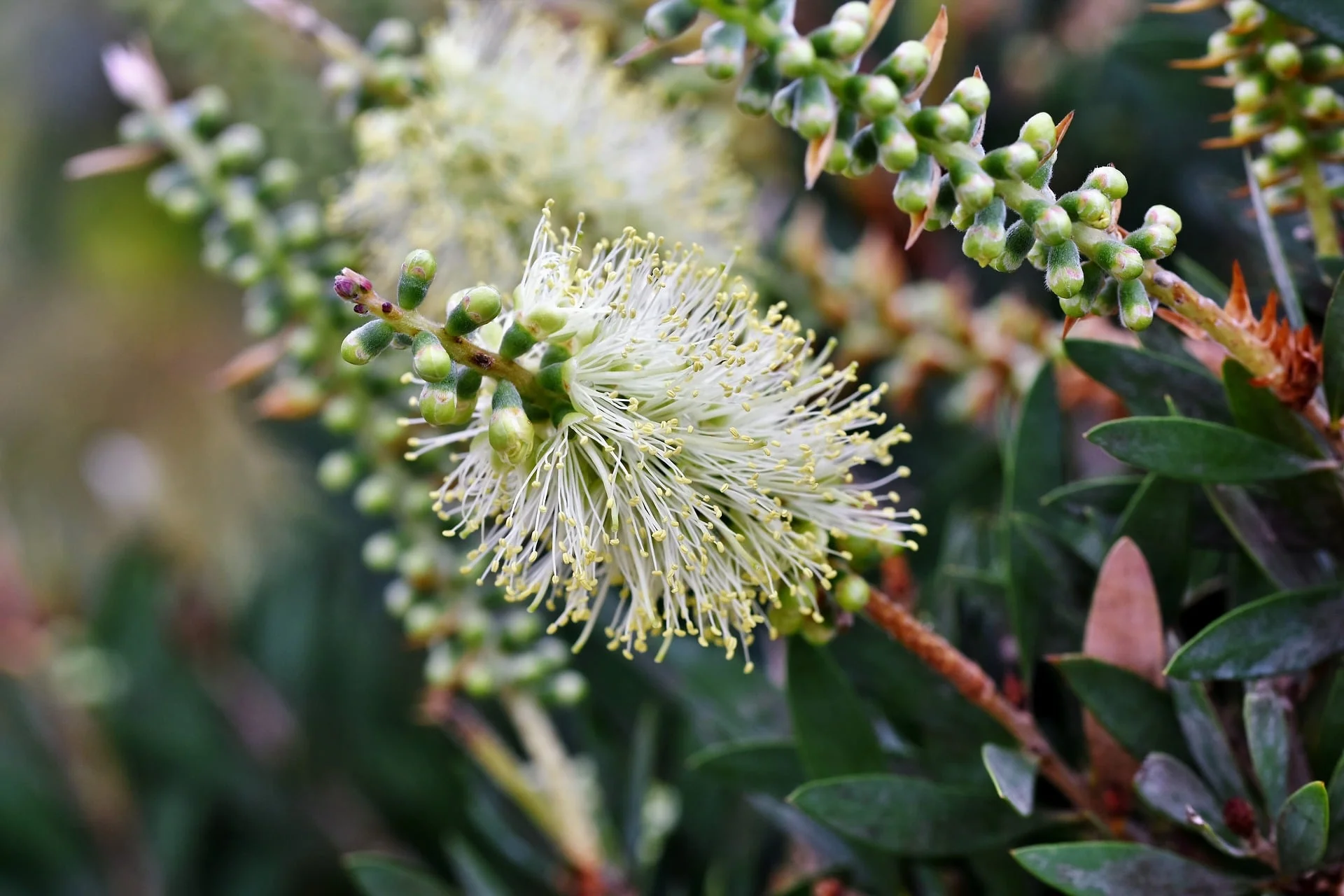
Callistemon - white

Establishing new landscape plantings is most successful if timed right

Here in San Diego and Southern California, we are coming up on the best season for planting landscape trees, shrubs, perennials, turf and ground covers. On large homeowner association, estate and municipal sites, it is difficult to have a good new plant establishment rate without extra care like additional watering and monitoring. That extra care takes time away from what the grounds staff is already responsible for maintaining on site.

If your property is investing in landscape plant upgrades, be sure you have a plan and schedule in place for fall planting. It will save your site money in plant replacement costs, extra water usage, and staff time devoted to plant “babysitting.”

Why is fall the best time for landscape planting?

  1. The days are shorter. Plants have less time to loose water via transpiration through their leaf surfaces, and soil moisture loss is decreasing.
  2. Temperatures are cooler. Plants will require less water less frequently than during hot days to maintain health and vigor.
  3. The angle of the sun is lower. Plant stress from direct, overhead hot sun rays is minimized.
  4. The soil is still warm. Plant roots will establish more rapidly in warmer soil vs. cool soil.
  5. The rain is coming (hopefully). Plant watering on a large scale is more efficient and of higher quality when provided by nature.

So time your landscape upgrades for fall, preferably after the first measurable rain to help flush salt accumulation from the soil. Your plants will establish roots better and suffer less stress if you plan ahead. Need a planting plan, consultation or project monitoring? Just ask!